


Why do sighthounds wear wide collars?
Sighthounds such as Whippets, Greyhounds, Galgos, and Salukis are known for their elegance, speed, and slender build. One of the most common questions among dog owners is: why do sighthounds wear wide collars?
Narrow heads and slim necks
Sighthounds are built for speed. Their heads are often almost as narrow as their necks. While this aerodynamic shape is perfect for running, it creates a challenge when wearing a collar: a standard collar can easily slip over the head.
That is why a regular dog collar is often not secure enough for these breeds.
Why wide sighthound collars are used
To solve this problem, special collars have been developed specifically for sighthounds over the years.
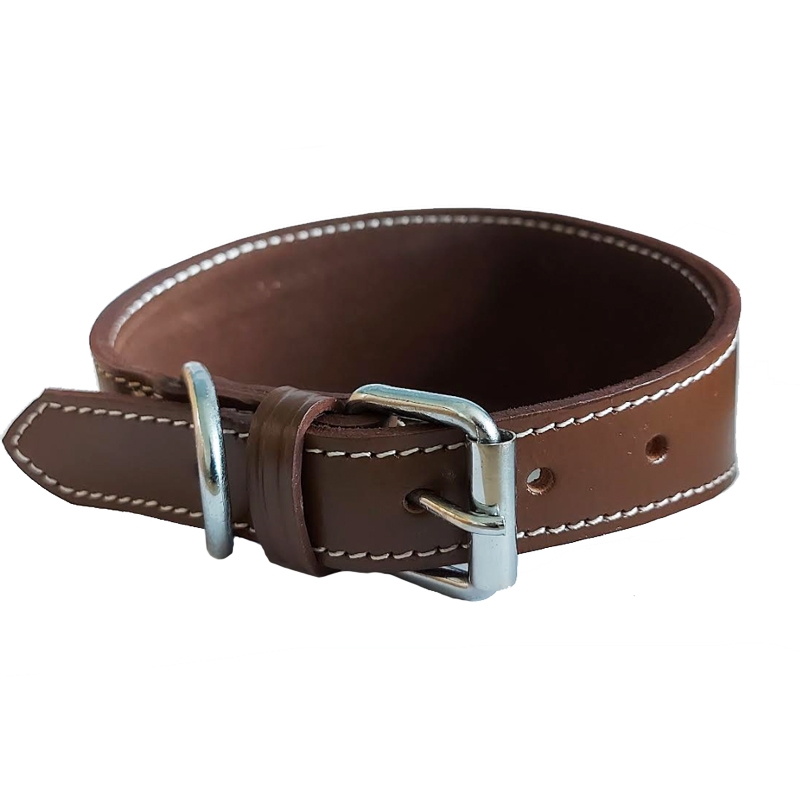
The most well-known type is the fishtail collar. This leather collar is typically around 5–7 cm wide at its widest point and tapers towards the buckle. When worn correctly, the wide section sits around the throat, while the buckle and D-ring (for the leash) rest at the top of the neck, aligned with the ears.
This design prevents the collar from slipping over the dog’s head, while still distributing pressure comfortably across the neck.

Martingale collars for sighthounds
Another increasingly popular option is the martingale collar. This collar tightens slightly when the dog pulls, making it impossible for it to slip over the head.
While it works similarly to a slip collar, the wider design ensures that pressure is distributed safely and comfortably. Unlike choke chains, martingale collars are a much more humane and dog-friendly alternative.
